 Vextro Lyntra
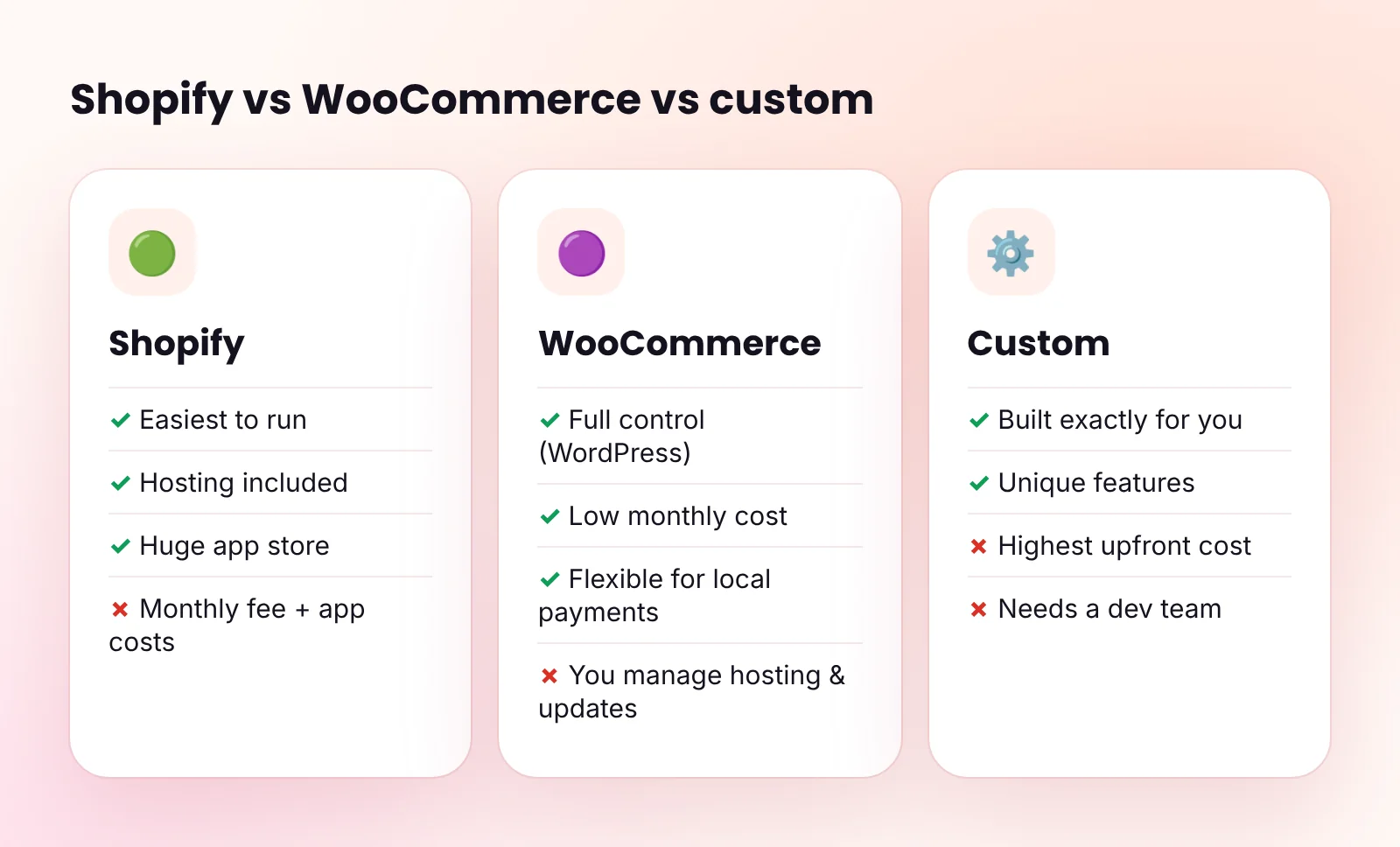
Choosing the platform is the first big decision when you start selling online, and it affects your costs, your daily work and how easily your store can grow. Here's a clear comparison of the three main options.
The short answer
- Shopify if you want the easiest store to run and don't want to deal with hosting or updates.
- WooCommerce if you want full control, low monthly costs and flexibility, especially for local payment and delivery setups.
- Custom if your business model needs features the platforms can't handle well.
Shopify
Shopify is an all-in-one hosted platform. You pay a monthly plan, and hosting, security and updates are handled for you. Its theme and app store cover almost every need, from reviews to upsells.
Good for: brands that want to launch fast and focus on marketing rather than technical work. Watch out for: app subscriptions add up, and some payment setups carry extra fees.
WooCommerce
WooCommerce is a free plugin that turns a WordPress site into a store. You own everything and can customise almost anything. It works well with local payment gateways, bank transfer, cash on delivery and courier integrations.
Good for: businesses that want control and low running costs, and stores that also need a content-rich website. Watch out for: you're responsible for hosting, updates and backups, so pick good hosting or a maintenance plan.
Ready to launch your online store?
We build Shopify, WooCommerce and custom stores with payments, delivery options and product setup. From $149.
See e-commerce packages →Custom-built store
A custom store is built from scratch for your exact needs. It's the most flexible option but has the highest upfront cost and needs developers for every change.
Good for: marketplaces, complex pricing or subscription logic, and businesses that need deep integration with their own systems.
Selling in Pakistan
For a store that sells inside Pakistan, a few things matter more than the platform name:
- Cash on delivery is still expected by many buyers.
- Bank transfer and wallets are popular for prepaid orders.
- Courier integration saves hours of manual booking and tracking.
- A WhatsApp button answers questions and closes sales faster.
How to launch your store
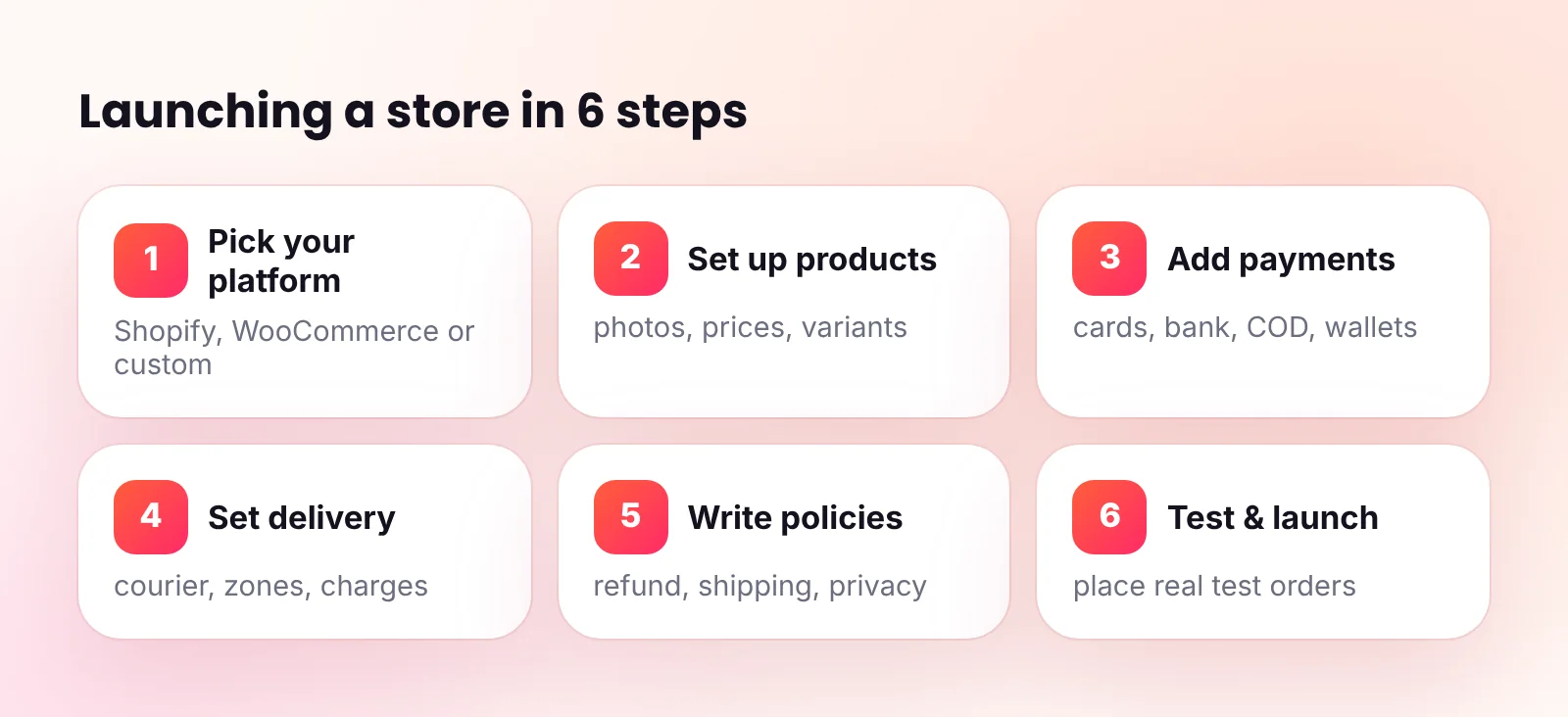
Always place a few real test orders, including a cash on delivery order and a refund, before you announce the store.
What makes a store actually sell
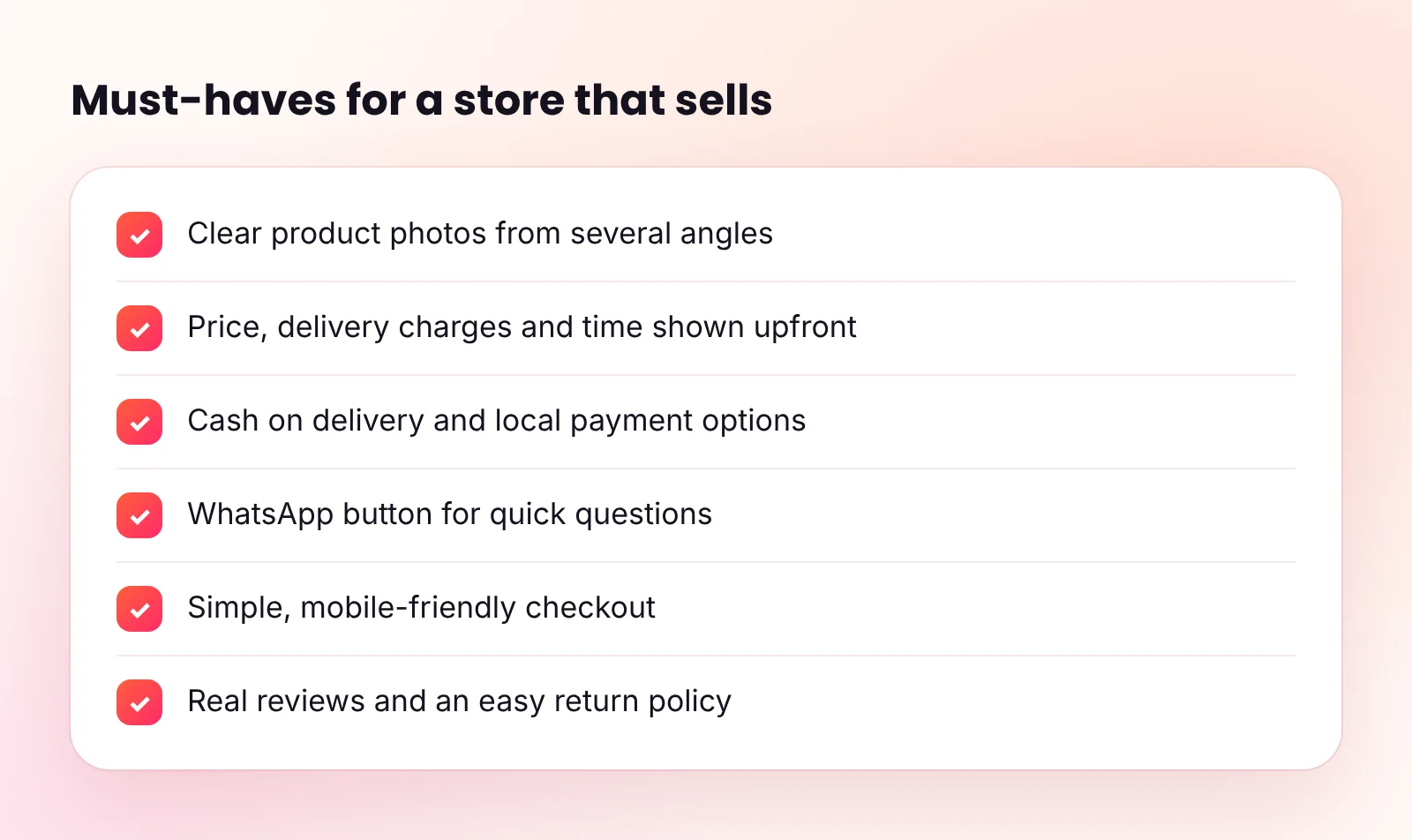
Trust is everything for a new store: real photos, clear delivery times, reviews and an easy way to contact you make a bigger difference than fancy design.
Summary
Pick Shopify for simplicity, WooCommerce for control and low running costs, and custom only when your business truly needs it. Whichever you choose, focus on clear products, local payment options, fast delivery and trust signals; that's what turns visitors into customers.
Frequently asked questions
Which platform is cheapest to start with?
WooCommerce usually has the lowest monthly cost because you only pay for hosting and any premium plugins. Shopify has a monthly plan but includes hosting and security.
Can I accept cash on delivery?
Yes. Both Shopify and WooCommerce support cash on delivery, and you can add bank transfer and local wallet options too.
Can I move from one platform to another later?
Yes, products, customers and orders can be exported and imported, but it takes work. Choosing the right platform at the start saves time.
When does a custom store make sense?
When you need features the platforms can't do well, such as complex pricing, marketplaces with many sellers, or deep integration with your own systems.
Ready to launch your online store?
We build Shopify, WooCommerce and custom stores with payments, delivery options and product setup. From $149.
See e-commerce packages →